

Sair Kar Tu Bhi Ye Majmua Pareshani Ka - Nasir Abbas Nayyar
Sair Kar Tu Bhi Ye Majmua Pareshani Ka - Nasir Abbas Nayyar
Couldn't load pickup availability
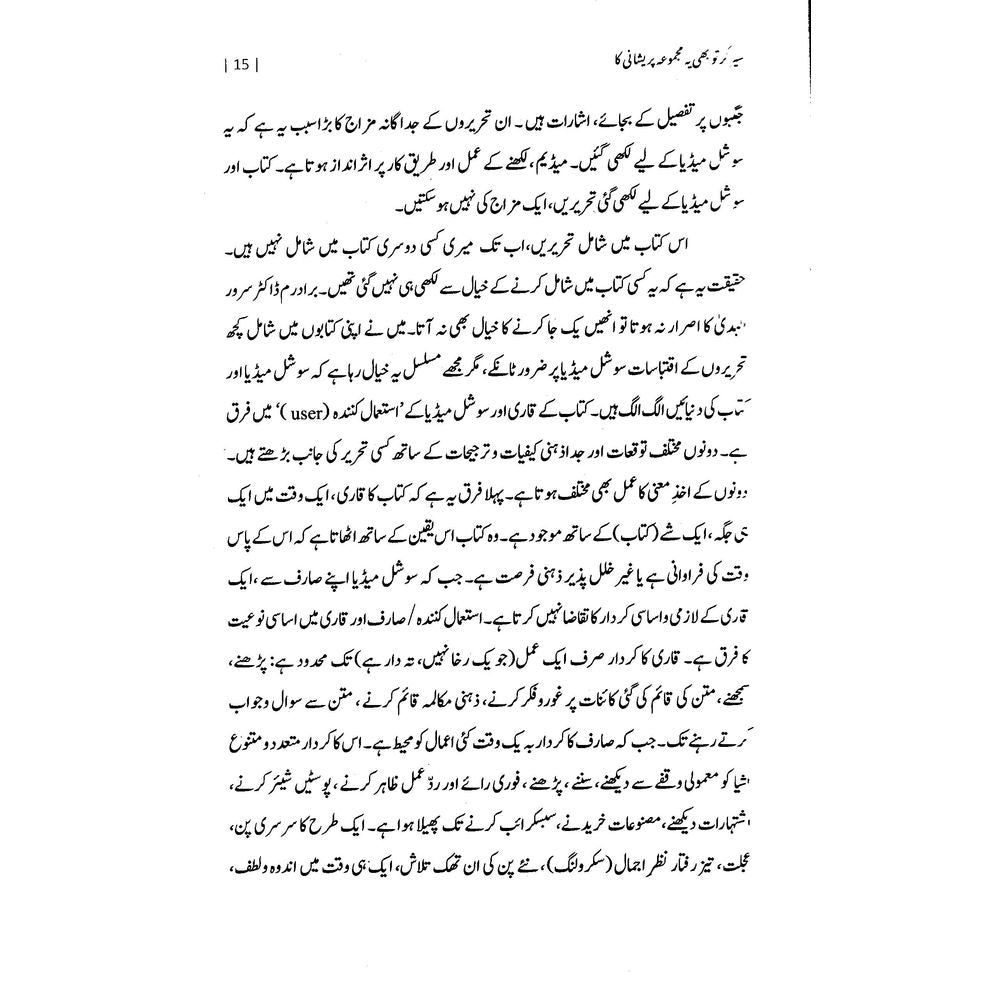
اس مجموعے کی تحریریں اردو زبا ن وادب کی کچھ ویب گاہوں کے لیے لکھی گئیں یا فیس بک کے لیے۔ویب گاہوں کی تحریروں میں ذرا سی طوالت ہے، فیس بک جس کی متحمل نہیں۔اب میں ویب گاہوں کے بجائے راست اپنی فیس بک کی دیوار پر لکھتا ہوں۔
میں نے سوشل میڈیا پر کئی موضوعات پر لکھا ہے۔یہ سلسلہ 2016 سے باقاعدہ شروع کیا تھا۔ سماجی ، ادبی ، لسانی،عالمی ، قومی ، تاریخی ، ماحولیات ، مذہبی شدت پسندی جیسے مسائل پر۔ گزشتہ ڈیڑھ صدی سے مصنف ہونے کا ایک مطلب ہے، اپنی تحریروں کو اپنے زمانے کا گواہ بنانا۔اس زمانے میں بھی مصنف ہونے کا یہ مطلب برقرار ہے۔ ان تحریروں کا ایک حصہ ، اسی گواہی پر مبنی ہے، تاہم میں نے اس گواہی کو ایک ادیب کی گواہی ہی بنانے کی کوشش کی ہے۔ ادیب کی گواہی کیا ہے؟ سماج میں ہونے والی ہراس تبدیلی کو محسوس کرنا ،اس تبدیلی کی ماہیت، مقصد اور رخ کو سمجھنا، یہ جاننے کی کوشش کرناکہ وہ تبدیلی کس کی طاقت اور نفع میں اور کس کے مصائب میں اضافہ کررہی ہے۔نیز مصیبت زدہ لوگوں کے ساتھ کھڑا ہونا اور ان مصائب کے ذمہ داروں کی ملامت کرنا،تاہم ایک ایسے اسلوب میں جو چیختا ہوا نہ ہو۔اس اسلوب کی ضرورت اس لیے بھی ہے کہ آپ کو اپنی بات کہنے کا موقع ملتا رہے۔ تاہم ادیب اپنے زمانے کا گواہ ہونے کے علاوہ، انسانی ہستی کے اسراراور تہذیب ِانسانی کے حاصلات کا عارف اور محافظ بھی ہوتا ہے۔
سوشل میڈیا پر لکھتے ہوئے میں نے مسلسل زبان ، ادب ، تاریخ ، فکر یات پر لکھنے کی دانستہ کوشش کی ہے۔ محض لمحہ حاضر کے واقعات پرلکھنے سے ، آپ انسان ، تاریخ ، تہذیب کو شکستہ اور تخفیف پر مبنی تصور کرتے ہیں۔ آدمی ،سماج ، تاریخ ، تہذیب کا سچ، ایک دن یا ایک عہد میں ظاہر نہیں ہوتا۔ لہٰذا میں نے کوشش کی کہ لمحہ حاضر پر مرتکز سوشل میڈیا پر ان ’خالص ادبی و فکری ولسانی ‘ مسائل پر لکھتا رہوں،جن کی حیثیت مستقل سوالات ومباحث کی ہے۔ وہ تحریریں بھی ا س کتاب کا حصہ ہیں۔ میں نے اپنی جملہ تحریروں میں ادب کو بہ ہر حال ’مرکز ‘ میں رکھنے کی کوشش کی ہے۔ صرف اسلوب میں نہیں،مسائل کی حسیت اور محاکمے میں بھی۔
سوشل میڈیا پر ادبی تحریریں لکھنا اور شائع کرنا، ایک نیا تجربہ ہے۔ یہ اخبارات ورسائل میں اپنی تحریریں شائع کروانے سے بالکل مختلف ہے۔ پہلا فرق تو وقت کا ہے۔پہلے آپ لکھتے تھے۔ ای میل یا زمینی و ہوائی ڈاک سے اپنی تحریریں بھیجتے تھے۔ وہ کچھ دنوں ، ہفتوں اور بعض اوقات مہینوں بعد شائع ہوتی تھیں۔ آپ کے لیے انتظار معمول کی بات تھی۔ تحریر اور اس کی اشاعت میں وقفہ، آدمی میں صرف ٹھہراؤ، آرزو مندانہ انتظار کی اہلیت ہی پیدا نہیں کرتا تھا، خود اپنی تحریر سے ایک جذباتی فاصلے کو بھی جنم دیتا تھا۔ نیز اخبار اور رسالے میں تحریر ،ادارت کے بعد شائع ہوا کرتی تھی ۔ اخبار اور رسالے میں شائع ہونے والی تحریر کی ذمہ داری ،مصنف اور مدیر میں بٹ جایا کرتی تھی۔ چناں چہ مدیر آپ کی تحریر کا ہر ہر پہلو سے ناقدانہ جائزہ لینے، ضرورت پڑنے پر تبدیلی وترمیم کرنے یا تجویز کرنے کے بعد شائع کیا کرتا تھا۔ مصنف کی کسی کوتاہی کی تلافی کے لیے مدیر موجود ہوا کرتا تھا۔ سوشل میڈیا نے ایک تو تحریر سے مصنف کا جذباتی فاصلہ ختم کردیا ہے، دوسری طرف مدیر کا کردار ۔ نئے مصنفوں کو سوشل میڈیابہت لبھاتا ہے کہ ان کے لیے کسی تحریر کے مکمل ہونے کا لمحہ ہی اس کی اشاعت کا لمحہ ہے، اور اگلے ہی لمحے وہ پڑھا اور سراہا جانے بھی لگتا ہے،اور اس بات کی اہمیت باقی نہیں رہی کہ پڑھنے اور سراہنے والے کون ہیں ،باذوق و صاحب فہم ہیں یا نہیں۔ یہ چیز نئے لکھنے والوں کو بہ طور مصنف کتنا فائدہ پہنچاتی ہے، اس کا جائزہ لیے جانے کی ضرورت ہے۔ ایک بات بالکل واضح ہے، کوئی شخص مسلسل محنت وریاضت ، اپنے کام پر نظرثانی ، ادب کی روایت، پیش روؤں ، مستند سینئر معاصرین سے اکتساب اور خود اپنی روح میں غوطہ زن ہوئے بغیر ایک مصنف ہونے کا اعتبار حاصل نہیں کرسکتا۔ کوئی بھی صلاحیت پیدائشی ہوسکتی ہے، مگر اس کے اظہار میں جمال ،نفاست اورزیرکی؛ اکتساب اور مشق سے آتی ہے۔
سوشل میڈیا کے لیے لکھی گئی تحریروں کو کتابی صورت میں لانے کا تجربہ بھی نیا ہے! اس کا نتیجہ اور اثر دیکھتے ہیں۔
ڈاکٹر ناصر عباس نئیر
Title: Sair Kar Tu Bhi Ye Majmua Pareshani Ka
Author: Nasir Abbas Nayyar
Subject: Urdu Literature
ISBN: 9693537912
Year: 2026
Language: Urdu
Number of Pages: 565
Publisher: Sang-e-Meel Publications, Lahore.


- 5 stars: 1 (100%)
- 4 stars: 0 (0%)
- 3 stars: 0 (0%)
- 2 stars: 0 (0%)
- 1 star: 0 (0%)
Walking Through the Labyrinth of Human Anxieties: A Critical Reflection on Nasir Abbas Nayyar’s Sair Kar Tu Bhi Ye Majmua Pareshani Ka
There are books that inform us, books that entertain us, and then there are books that invite us to reconsider the very assumptions through which we understand ourselves and the world. Dr. Nasir Abbas Nayyar’s Sair Kar Tu Bhi Ye Majmua Pareshani Ka belongs to the latter category.
Borrowing its evocative title from Mir Taqi Mir’s celebrated couplet—
Darhamī-e-hāl hai sāre mire dīvān mein
Sair kar tū bhī ye majmūa-e-pareshānī kā
Nayyar takes the reader on an intellectual journey through the contradictions, anxieties and uncertainties of contemporary existence.
What fascinates me most about this collection is its refusal to remain confined within disciplinary boundaries. Literature, language, criticism, history, politics, religion, environment, artificial intelligence, human psychology and ethics become interconnected sites of intellectual inquiry. The author approaches these subjects not as isolated phenomena but as manifestations of a larger human condition.
One particularly arresting observation reads: “Hum doosron ko samajhne se zyada, un ke baare mein hukm lagane ki ghalti karte hain” (We are more inclined to pass judgments on others than to understand them). This sentence captures an important intellectual and ethical dilemma of our times. In an age of ideological polarisation and instant judgments, the ability to understand before condemning is perhaps one of the most neglected forms of wisdom.
Another thought that deserves particular attention is the author’s emphasis on intellectual honesty: “Mutala bohat karo aur jab likhne baitho to achha likhne se zyada diyanatdari se likhne ki koshish karo.” The distinction between writing beautifully and writing honestly is significant. It reminds us that intellectual integrity is not merely an academic virtue; it is also a moral responsibility.
As a student of literature and someone interested in postcolonial thought, I find Nayyar’s understanding of the writer’s responsibility especially compelling. The writer is not simply a spectator of history but a sensitive witness to the transformations taking place around us. To recognise suffering, question structures of power, listen to marginalised voices and preserve the complexity of human experience are essential dimensions of literary consciousness.
Perhaps the most interesting aspect of the book is its implicit argument that literature should not merely reproduce the world; it should help us interrogate it. Its intellectual range makes the reading experience particularly rewarding, while its reflective prose encourages the reader to pause, disagree, question and reconsider.
I also find the title philosophically suggestive. Why should we take a journey through a collection of anxieties? Perhaps because understanding the world requires us to confront its disorder rather than escape into comforting certainties. Literature does not always offer solutions; sometimes it offers something more valuable: the courage to live with questions.
For me, this is where the intellectual appeal of Nayyar’s work lies. It makes reading an exercise in self-reflection and critical consciousness. It reminds us that an intellectually alive mind must remain curious, sceptical of ready-made truths and compassionate towards human vulnerability.
Ultimately, Sair Kar Tu Bhi Ye Majmua Pareshani Ka is an invitation to undertake a journey through the intellectual, social and existential anxieties of our age. A journey not necessarily towards answers, but towards a deeper understanding of the questions that make us human.
Dr Mubashar Altaf
Lecturer
Department of English
University of Sargodha