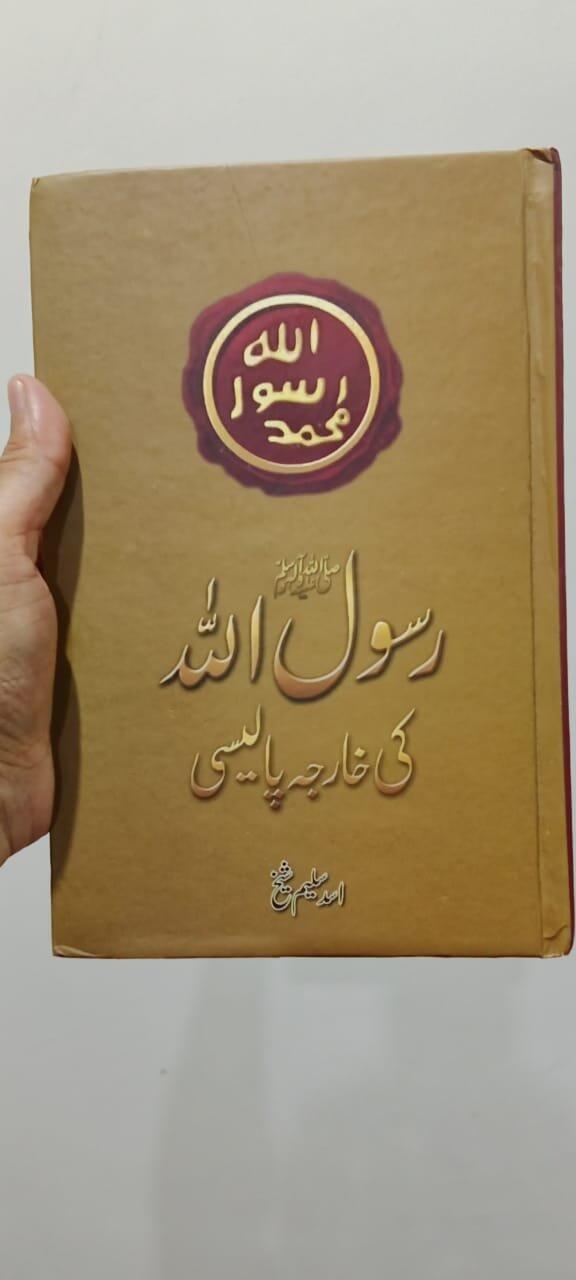
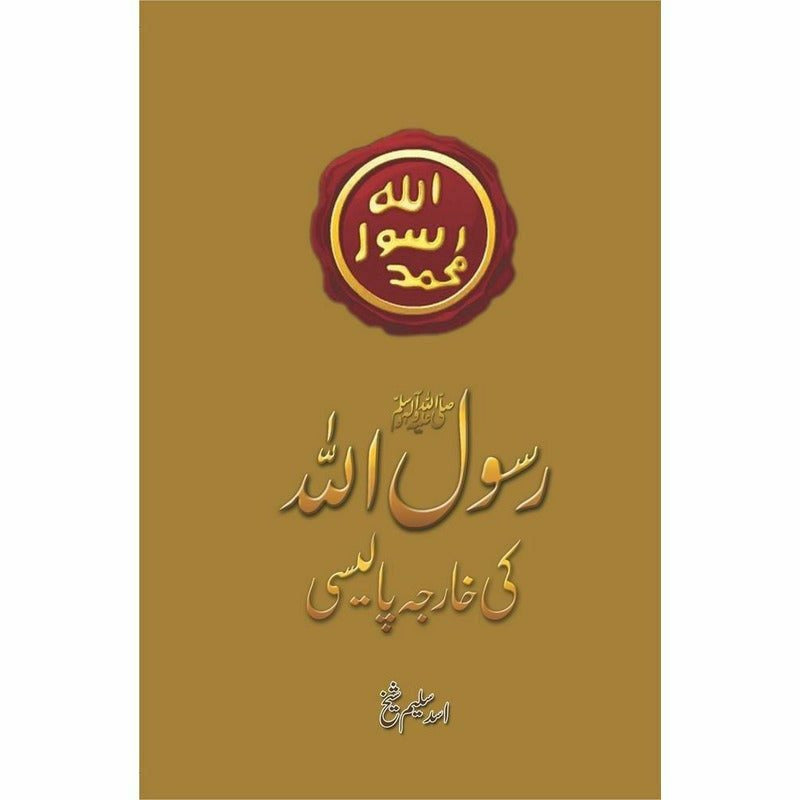
Asad Saleem Sheikh's 'Rasool Ullah Ki Kharja Policy' is a remarkable achievement, precisely crafted to illuminate the diplomatic genius of Prophet Muhammad (peace be upon him). The book's chapter wise structure is a proof to its thoughtful organization, beginning with a vital historical context: the tribal schisms of pre Islamic Arabia and the external influences of Persia and Africa. This foundation is crucial for understanding the complexities the Prophet faced.
Writer's ability to describe the attributes of a global leader and then flawlessly demonstrate how these qualities were personified by Prophet Muhammad (PBUH) is truly enlightening. He doesn't merely recount history; he paints a vivid picture, allowing readers to experience the early days of Islam through a lens of insightful analysis. The first six chapters, covering the foundational principles of the Prophet's foreign policy, the migrations to Africa and Madina, are particularly captivating.
I was thoroughly impressed by the author's ability to blend historical accuracy with engaging narrative. The promise of delving into the Prophet's war strategies and the context of battles like Uhud, Badr, Tabuk, and Mu'tah and Treaty of Hudaybiya is informative and exciting. Furthermore, the thorough referencing throughout the book demonstrates a commitment to scholarly integrity. I can confidently say that 'Rasool Ullah Ki Kharja Policy' is a valuable addition to the study of Islamic history and a compelling read for anyone seeking to understand the Prophet's profound impact as a statesman and leader.